Crete has hundreds of monasteries, but four stand apart for their historical significance, architectural beauty and the stories embedded in their walls. Each represents a different chapter in Cretan history — Venetian occupation, the War of Independence, Byzantine spirituality and the Second World War resistance.
1. Moni Arkadiou (Arkadi Monastery) — Rethymno
The most visited and historically important monastery in Crete. On 9 November 1866, during the Cretan revolt against Ottoman rule, approximately 1,000 Cretan fighters and civilians took refuge inside Arkadi when it was surrounded by 15,000 Ottoman troops. Faced with certain capture, the abbot Gabriel and the Cretan rebel commander ordered the gunpowder magazine to be ignited. The explosion killed hundreds of defenders and attackers alike. The "Holocaust of Arkadi" shocked Europe, generated international sympathy for Cretan independence and is considered one of the defining moments of 19th-century Greek nationalism.
The building: The west facade of the monastery church (1587) is one of the finest examples of Venetian Renaissance architecture in Crete — an elegant baroque portal flanked by Corinthian columns, incongruous in the Cretan hills. Behind it, the double-aisled church is dedicated to the Transfiguration. The monastery refectory (now a museum) still bears the marks of the 1866 explosion.
What to see: The museum contains vestments, manuscripts, icons and weapons from the 1866 siege. A small ossuary just outside the entrance holds the skulls of those killed. The setting — rolling hills covered in olive groves and vineyards — is peaceful, which makes the violent history all the more affecting.
Visiting: Open daily 09:00-20:00 (summer) / 09:00-17:00 (winter). Entry 3 euros. Modest dress required. The monastery sells local products including wine, olive oil and honey.
2. Moni Toplou — Lasithi (near Sitia)
Moni Toplou is the most fortified monastery in Crete — its massive stone walls and single fortified entrance were built to defend against pirate raids from the 15th century onward. The name "Toplou" comes from the Turkish word for "cannon" (top), reflecting the artillery the monastery once kept for its own defence.
The icon: The monastery's most important treasure is the large icon "Great Thou Art O Lord" (1770) by Ioannis Kornaros — one of the masterpieces of the Cretan school of Byzantine painting. The icon depicts 61 separate scenes from the Old and New Testaments in minute, luminous detail, each scene illustrated with a line from an ancient Cretan hymn. It is displayed in the monastery church.
The wine: Toplou owns extensive vineyards in the far east of Crete and operates one of the best wineries on the island. The Toplou Winery cellar door is adjacent to the monastery and offers tastings of their Sitia PDO reds and whites (and an excellent Muscat). Open most days in summer without booking.
WWII history: During the German occupation of Crete (1941-1944), the abbot Silvanos Frantzeskakis hid Allied soldiers and Cretan resistance fighters at considerable personal risk, and was eventually shot by the Gestapo.
Visiting: Open daily 09:00-13:00 and 14:00-18:00. Entry 3 euros. The monastery gift shop stocks their wines, olive oils and honey. Dress code strictly enforced.
3. Moni Gouverneto & Katholiko — Chania (Akrotiri Peninsula)
This is Crete's strangest and most atmospheric monastic complex — two monasteries in one visit, connected by a gorge walk through terrain that feels ancient and wild.
Gouverneto (upper monastery) is one of the oldest active monasteries in Crete (founded 1537), built with fortress-like walls on a plateau above the northern sea cliffs. The church facade is a rare blend of Gothic, Renaissance and Byzantine elements. A small museum holds Venetian-era icons and manuscripts.
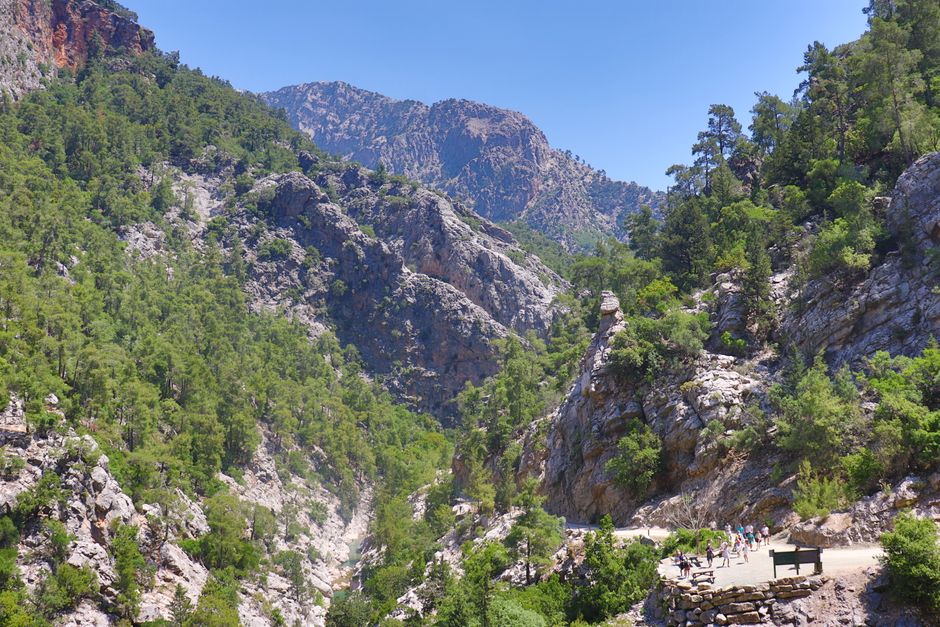
But the real draw is the 20-minute walk down into the gorge to Katholiko — the oldest abandoned monastery in Crete (founded in the 10th or 11th century, abandoned in the 17th due to pirate raids). The path descends through a narrow ravine past a cave containing a large stalagmite revered as a natural icon of a bear (the word arkouda means bear in Greek — there is a legend connecting the cave to Saint John the Hermit). The ruined monastery of Katholiko sits on a dramatic bridge spanning a dry gorge, with the cave cells of early Byzantine hermits visible in the cliff faces above. Continue another 20 minutes to reach a sea inlet — a ghostly, beautiful walk.
Visiting: Gouverneto is open morning and late afternoon (closed during midday rest, typically 13:00-17:00). Entry to Gouverneto is free; the gorge walk to Katholiko is also free. Modest dress required. Do not visit on Sunday morning or major feast days when services are in progress.
4. Moni Preveli — Rethymno
Preveli Monastery occupies a clifftop position above the Libyan Sea with views that seem to take in half of Crete. Founded in the 17th century, it has two campuses: the lower monastery (Kato Preveli, now a ruin) on the river below, and the upper monastery (Piso Preveli), which is the active one visited today.
The relic: The monastery's most prized possession is a fragment of the True Cross (Timios Stavros) housed in a Byzantine gilded reliquary. It is paraded through the monastery on the Feast of the Holy Cross in September.
WWII significance: After the Battle of Crete (May 1941), the abbot Agathangelos Lagouvardos organised a network to shelter and ultimately evacuate hundreds of Allied soldiers (British, Australian, New Zealand) who were cut off after the German invasion. Submarines dispatched from Alexandria collected soldiers from the beach below the monastery. A memorial plaque near the monastery entrance commemorates the episode; the National War Memorial of Australia lists the abbot by name.
Visiting: Open daily 09:00-13:00 and 15:00-19:00. Entry 3 euros. See the full Preveli Beach guide for how to combine the monastery with the famous palm gorge below.
Practical Tips for Visiting Cretan Monasteries
- Dress code: All monasteries require covered shoulders and knees for both men and women. Scarves and long skirts are usually available at the entrance for those who arrive underprepared.
- Photography: Usually allowed in the grounds; ask before photographing inside the church.
- Opening hours: Most monasteries close for a midday break (13:00-15:00 or 13:00-17:00) and are closed on major feast days.
- Donations: There is usually a donation box inside the church even where there is no formal entry fee. A 1-2 euro donation is appropriate.
- Timing: Visit monasteries in the morning or late afternoon. Midday visits are often impossible due to closing hours and are unpleasant in July-August heat.
Frequently Asked Questions
Which is the most important monastery in Crete to visit?
Arkadi Monastery near Rethymno is the most historically significant and most visited. It has the best museum and the most moving story (the 1866 siege). Toplou is the best combination of art (the great icon), wine tasting and fortress architecture. Gouverneto/Katholiko offers the most unusual experience — a gorge walk to a ruined cave monastery.
Do I need to dress modestly to visit Cretan monasteries?
Yes. All monasteries require covered shoulders and knees. Shorts are not allowed. Most monasteries keep scarves and wraps at the entrance to loan to visitors who arrive underprepared. The rule is strictly enforced — entry may be refused.
Is the walk to Katholiko monastery difficult?
No — it is an easy 20-minute walk down a rocky path from Gouverneto. Wear comfortable shoes (not flip-flops). The path is shaded and interesting. The return uphill takes 25-30 minutes. Suitable for most fitness levels.
Can I combine Arkadi Monastery with other sights in a day trip from Rethymno?
Yes. Arkadi is 25 km from Rethymno (30 minutes by car). Combine it with Preveli Monastery and Preveli Beach for a full day covering Rethymno's two most important sites. Drive south from Rethymno to Arkadi in the morning, then continue south over the Ida foothills to Preveli in the afternoon.
Plan with us: browse Crete region guides, compare ferries to Crete, reserve a car with a local Crete agency, or ask our AI trip planner for a custom Crete itinerary.