Matala is unlike any other place in Crete. A small bay on the south coast backed by sandstone cliffs riddled with ancient cave tombs — caves that became famous worldwide in the 1970s when Joni Mitchell, Cat Stevens and Bob Dylan (allegedly) camped here alongside thousands of hippies from across Europe and America. The hippies are gone but the caves remain, and so does the free-spirited atmosphere that made Matala a place of pilgrimage.
The Setting
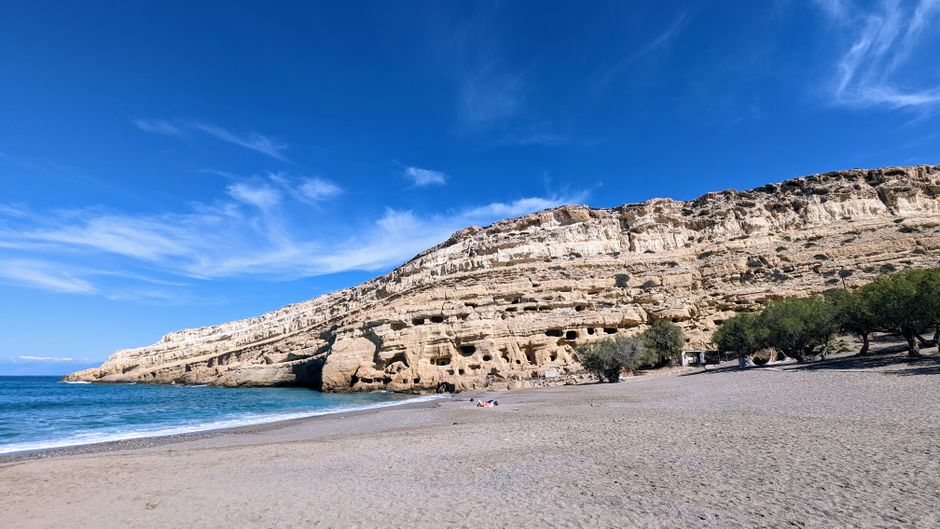
The beach sits in a near-perfect semicircle of red-tinged sandstone. The water is clear and calm, sheltered by the curve of the bay. The north end of the beach is backed by the famous cave cliff; the south end is open to the Libyan Sea. There is a small fishing harbour with a few colourful boats. Tavernas and rooms line the single main road. The whole village feels resolutely low-key — no high-rise hotels, no luxury resorts.
The Cave Tombs
The caves carved into the sandstone cliff at the north end of the beach are ancient Roman and early Christian tombs, cut between the 1st and 5th centuries AD. They are now fenced off and form a small archaeological site with a modest entrance fee (3 euros, includes a short walk through the lower caves). In the 1960s and 1970s, before the site was protected, the caves became free squats for the counter-culture nomads who had discovered Crete as the end of the hippie trail from Morocco, Turkey and Greece's own islands.
Joni Mitchell wrote the song Carey about her time in Matala ("We're leaving tomorrow for Matala / We're going to let the wild flowers go"), and her presence helped cement the village's legend. Today a small café near the beach is named after the song.
The Beach
Matala's main beach is sandy, shallow and calm — the bay protection means even light winds produce no wave action. It is excellent for families and non-swimmers. The water colour shifts from pale turquoise near the shore to deep blue in the centre of the bay. Sunbeds and umbrellas are available for rent.
A 15-minute walk south along the coastal path (crossing a small headland) brings you to Red Beach (Kokkinos Ammos) — a wilder, clothing-optional cove of red-tinted sand surrounded by dramatic cliffs, accessible only on foot or by boat. One of the most beautiful small beaches in Crete.
Kokkinos Pyrgos & Kalamaki
Driving east along the south coast from Matala, two beaches are worth a detour:
- Kalamaki (6 km east): A long beach that is an important loggerhead turtle nesting site (Caretta caretta). The eastern section is protected in nesting season (June-August); the western section is open with tavernas and rooms.
- Kokkinos Pyrgos (15 km east): A compact village with an excellent fish market and the best fish tavernas on this stretch of coast. Less visited than Matala itself.
Phaistos & Gortyn: Day Trips from Matala
Matala's location on the south-central coast makes it an excellent base for visiting two of Crete's most important ancient sites.
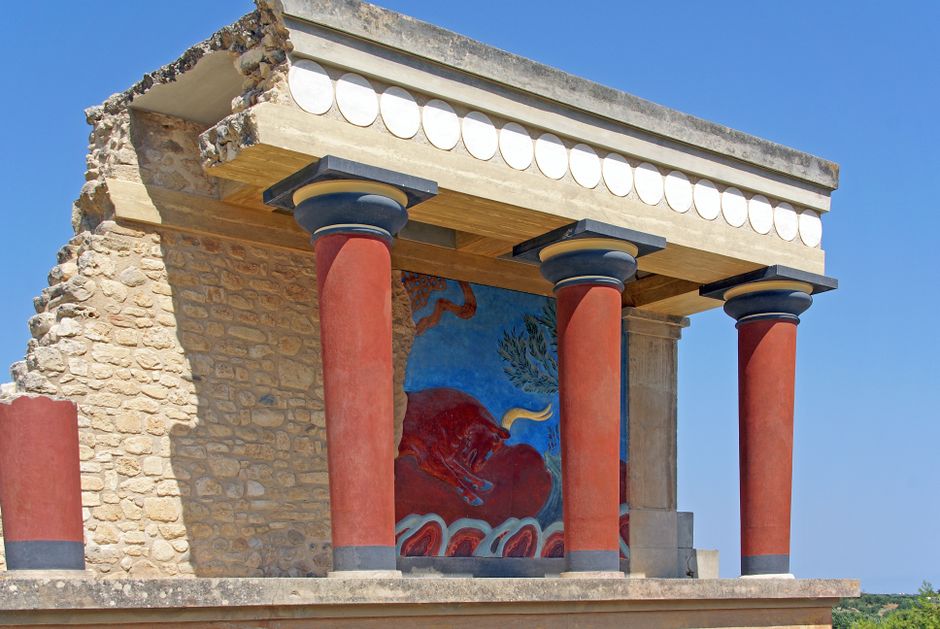
- Phaistos (11 km northeast): The second-largest Minoan palace on Crete, set on a hill above the Mesara plain with views to Mount Psiloritis. Less restored than Knossos and therefore more authentically ruinous — some archaeologists prefer it. The Phaistos Disc (whose undeciphered script remains one of archaeology's great mysteries) was found here, though the original is now in the Heraklion Archaeological Museum.
- Gortyn (18 km north): A vast ancient site straddling the main road, encompassing a Roman capital city (once the largest city in Crete), an early Christian basilica and the famous Law Code of Gortyn — the most complete surviving text of ancient Greek law, inscribed on stone blocks in the 5th century BC.
Getting to Matala
- From Heraklion: 75 km / 1h 20m drive south via Mires. KTEL buses also run from Heraklion bus station (check current schedule, typically 1-2 daily each way). By car is far easier.
- From Rethymno: 90 km / 1h 30m drive via Spili and Agia Galini (the scenic south coast road).
- From Chania: 140 km / 2h via Heraklion or Rethymno.
Book a rental car in Crete to make the most of the south coast — public transport is infrequent.
Where to Stay
Matala has a good range of budget and mid-range accommodation (rooms, small hotels, a few apartments). There are no international chain hotels — this is part of its appeal. The village is compact enough to walk everywhere. Peak season is July-August; book in advance. For more options in the wider area, see Heraklion region hotels.
Matala Hippie Festival
Each June, Matala hosts the Matala Beach Festival — a music and arts festival celebrating the village's counter-culture heritage. Local and Greek acts perform on the beach; the spirit is decidedly un-commercial. Dates change annually; check local Greek tourism boards for the current year's dates.
Practical Notes
- Parking: Matala has a signed car park at the village entrance (paid in peak season). The village centre is pedestrianised.
- Best time: May-June and September-October for warm sea without the August crush. The village quietens dramatically after October.
- Beach safety: The main beach is very safe. Red Beach requires a 15-minute walk over a rough coastal path; flip-flops are not suitable.
Frequently Asked Questions
Were the Beatles or famous musicians really in Matala?
Joni Mitchell is the most documented — she spent time in Matala in the late 1960s and wrote the song Carey about it. Bob Dylan and Cat Stevens are also mentioned in connection with the village in various accounts, though the documentation is looser. Matala was part of the 1960s-70s hippie trail that also included Ibiza and Morocco.
Is Matala beach good for swimming?
Yes. The bay is sheltered and calm with sandy, shallow water — excellent for swimming and families. The water clarity is very good. Red Beach (15 minutes walk south) is wilder and clothing-optional.
Can I visit the Matala caves?
The lower caves are accessible as a small archaeological site for 3 euros entry. You can walk through them and see the carved niches and early Christian symbols. The upper cliff caves are not accessible for safety reasons.
Is Matala worth visiting as a day trip from Heraklion?
Yes, and it combines naturally with Phaistos (11 km away) and Gortyn (18 km away) for a full day covering the south coast and two major ancient sites. The drive from Heraklion takes about 1h 20m. Allow 4-5 hours for beach time plus the ancient sites.
Plan with us: browse Crete region guides, compare ferries to Crete, reserve a car with a local Crete agency, or ask our AI trip planner for a custom Crete itinerary.