Chania Food Guide: Where to Eat, What to Try (2026)
Chania has the most refined food scene in western Crete - centred on the Venetian Old Town, the magnificent covered Agora market and the mountain villages of the White Mountains hinterland.
The Agora Market: Start Here
Built in 1913 in the shape of a cross (modelled on the Marseilles market), the Agora (covered market hall, central Chania) is the heartbeat of food culture in western Crete. Open Monday-Saturday, 08:00-14:00 (Thursday and Friday also 17:30-21:00 in summer).
What to buy:
- Cretan olive oil (single-farm, Kolovi variety from Kissamos): 12-18 euros per litre. Look for "PDO Kolymvari" or "PDO Sitia" labels.
- Graviera cheese (PDO): Crete hard cheese, aged 3-12 months. Milder and sweeter than Greek kasseri. The 12-month aged version is exceptional.
- Myzithra: Fresh whey cheese, similar to ricotta but drier. Used in pies and eaten fresh with honey.
- Thyme honey from Omalos: The White Mountains thyme produces an intensely aromatic honey. 8-15 euros per jar.
- Tsikoudia (raki): Village-distilled grape marc spirit. Buy from the stalls with unlabelled bottles - those are the genuine local product.
- Dried mountain herbs: Sage (faskomilo), Cretan ditany (diktamo), mountain thyme, wild oregano.
- Pasteli: Sesame and honey bars, a Minoan-era snack still sold unchanged.
The Best Restaurants in Chania Old Town
Where NOT to Eat
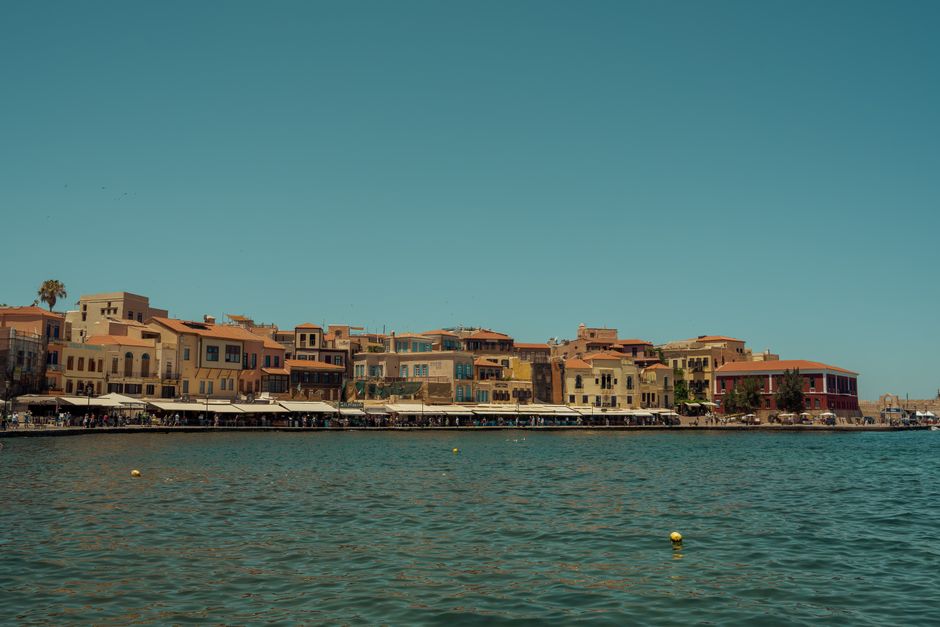
The outer Venetian harbour (Akti Koundourioti and Akti Tobazi - the waterfront strip) is ringed with restaurants aimed squarely at tourists: overpriced, mediocre, with tourist menus in eight languages and persistent doormen. Avoid them.
Where to Eat
To Maridaki (Daskaloyianni 33, inner harbour) The best fresh fish taverna in central Chania. Small, run by a fishing family. The selection depends on the morning catch. Order whatever they say is fresh. No reservations; arrive early (noon or 19:00) or queue.
Tamam (Zambeliou 49, Splantzia) In a converted Ottoman bathhouse (hammam), Tamam serves excellent Cretan-Ottoman fusion: lamb with prunes and spices, eggplant imam, stuffed vine leaves. Full of locals at lunch. Good wine list.
Apostolis (Akti Enoseos 6, inner harbour - the other harbour, away from tourists) Two locations at the small eastern fishing harbour. The best octopus in Chania - dried on washing lines, then grilled with olive oil. Simple, honest, excellent.
To Xani (Betolo 2, behind the market) Literally "the inn" - a traditional lunch taverna with no evening service and a changing daily menu on a chalkboard. Best dakos in Chania (barley rusk with tomato, myzithra, olive oil). Filled with market traders and office workers at 13:00. No English menu; point at what others are eating.
Mathioudakis (Daskaloyianni 20) The finest grocery-delicatessen in Chania. Not a restaurant but an essential stop: whole wheels of aged graviera, local olive oil, Cretan preserved meats and a remarkable selection of Cretan wines. The owner speaks English and will explain the products.
Traditional Cretan Dishes to Try in Chania
Dakos (Cretan bruschetta): Twice-baked barley rusk (paximadi) moistened with olive oil and topped with grated ripe tomato, crumbled myzithra and dried oregano. Simple, perfect, unmistakably Cretan.
Sfakiani Pita: From the Sfakia region of Chania prefecture. A thin unleavened flatbread (like a thick crepe) stuffed with fresh myzithra and fried on a griddle, then drizzled with thyme honey. Served for breakfast or as a snack; 2-3 euros. Find it at most Chania bakeries in the morning.
Apaki: Cold-smoked pork, marinated in wine vinegar and wild herbs (sage, thyme) before smoking. Thin-sliced, served as a meze. Intensely flavoured, no resemblance to supermarket bacon.
Chochlioi boubouristi (flash-fried snails): Snails in their shells, fried in olive oil with rosemary and a splash of wine vinegar. A uniquely Cretan dish, found at virtually every traditional taverna. The shells are used as a tiny ladle to scoop out the snail.
Stifado: Slow-braised rabbit (or hare, or veal) with small shallot onions, wine, allspice and bay. The Cretan version uses rabbit from local farms; the meat falls off the bone.
Lamb kleftiko (Sfakia style): Whole leg of lamb slow-roasted in a sealed clay pot with lemon, garlic and mountain herbs for 3-4 hours. The Sfakia mountain villages are famous for their lamb.
Kalitsounia: Small fried or baked pastries stuffed with myzithra and wild greens (or sweet myzithra with honey). Eaten for breakfast or as a snack. Every bakery in Chania makes them.
Cretan Olive Oil: Why It Matters
The Chania prefecture produces some of the finest olive oil in the Mediterranean. The dominant variety is the Koroneiki olive (the most widely planted olive in Greece), but the Kissamos area also has the rare Kolovi variety, which produces a more intensely fruity and peppery oil.
Why Cretan oil is exceptional: the Mediterranean climate, the rocky hillsides and the old Koroneiki trees (many are 300-400 years old) produce fruit with low moisture content and high polyphenol levels - resulting in oil with very low acidity (under 0.3%) and exceptional shelf life.
How to buy it: The Agora market is the best place. Ask for "extra virgin" (extra partheno) and for the harvest date (ideally current season, October-November 2025). Price: 12-20 euros per litre for single-farm oil; 8-12 euros per litre for cooperative blends.
Cretan Wine to Try
The Chania prefecture is not a major PDO wine region (that is Heraklion-Peza and Lasithi-Sitia), but several producers around Kissamos and the Stylos area make interesting wines:
- Manousakis Winery (Vatolakkos, 23 km east of Chania): Produces Roussanne, Syrah and local varieties in an impressive winery. Tours and tastings available by appointment.
- Dourakis Winery (Alikambos, 35 km east): One of the most established Chania wineries. Good Vilana (white) and Kotsifali-Mandilari (red). Open for tastings.
Where to Drink in Chania
Raki/Tsikoudia: Every traditional taverna offers a complimentary carafe of raki at the end of a meal, often with a small sweet or piece of fruit. This is a genuine Cretan gesture of hospitality - always accept it.
Coffee: Cretan kafeneions serve Greek coffee (vari glykos = very sweet, metrios = medium, sketos = no sugar). The best kafeneion in Chania old town is on Plateia Splantzia at the older stone benches.
Cocktails and wine bars: The Sarpedona Street corridor near the inner harbour and the Splantzia district have several good bars in converted Venetian buildings. Sommelier Bar (near the market) has the best Cretan wine list in the city.
Quick Reference: Chania Food Glossary
| Greek term | What it is |
|---|---|
| Dakos | Barley rusk with tomato and myzithra |
| Myzithra | Fresh whey cheese |
| Graviera | Hard aged Cretan cheese |
| Tsikoudia | Cretan raki (grape marc spirit) |
| Sfakiani pita | Myzithra-stuffed fried flatbread |
| Apaki | Smoked, herb-marinated pork |
| Stifado | Slow-braised rabbit or veal stew |
| Kalitsounia | Small fried myzithra pastries |
| Paximadi | Hard barley rusk |
| Pasteli | Sesame-honey bar |
Chania Food FAQ
Is it easy to eat vegetarian in Chania? Yes. Cretan cuisine has an unusually high proportion of vegetable and legume dishes: gigantes (giant white beans), fava (split pea puree), horta (wild greens with lemon and oil), lentil soup, dakos, and all the various cheese pies. You will not struggle.
How much should I budget for food in Chania? A full lunch or dinner at a good traditional taverna (3 courses, wine/raki): 20-30 euros per person. Fish restaurants add 30-50% for fresh fish (priced by weight). Street food and bakeries: 2-5 euros per item.
Is tipping expected in Chania restaurants? Not obligatory but appreciated. 5-10% of the bill is generous. Rounding up (leaving the change) is the minimum. At kafeneions: no tipping expected.