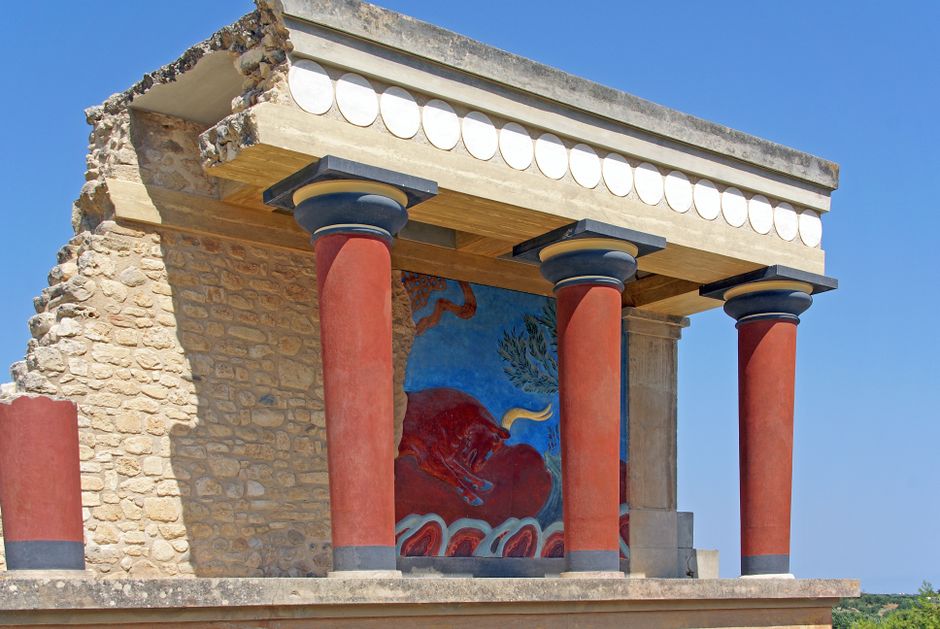
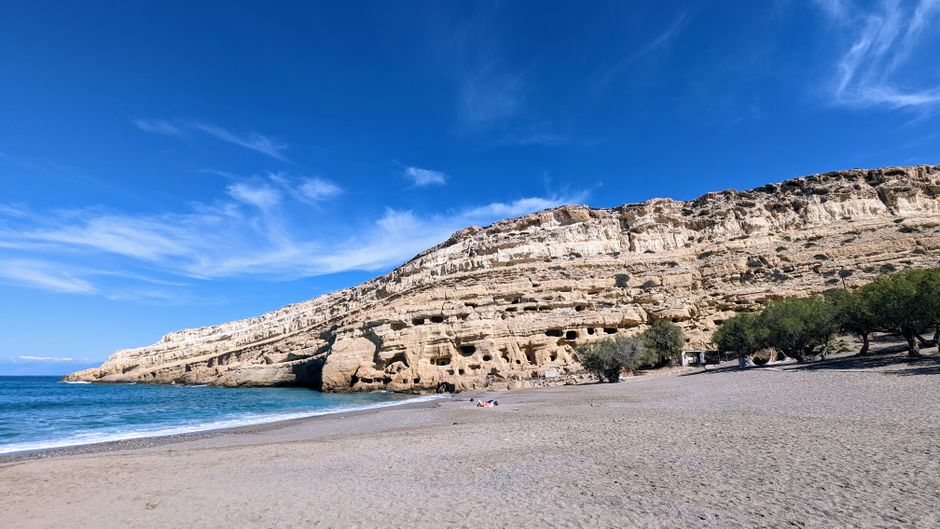
Crete has the mildest climate in Greece — its southern position gives long, warm seasons and short, green winters. Here is what to expect through the year.
Winter (Dec–Feb)
Cool and green, 12–16°C by day, with rain and snow on the mountains. The sea is too cold to swim, many resorts close, but towns like Chania and Heraklion stay lively and cheap.
Spring (Mar–May)
Wildflowers, warming days (15–24°C) and the best hiking weather. By May the sea is swimmable and most facilities have opened.
Summer (Jun–Aug)
Hot and reliably dry, 26–32°C, with the Meltemi wind cooling the north coast. Sea temperatures peak at 24–26°C. Peak crowds and prices — book ahead.
Autumn (Sep–Oct)
Many travellers' favourite: warm sea (still 23–25°C in September), pleasant air and thinning crowds. October cools and rain returns later in the month.
What to pack
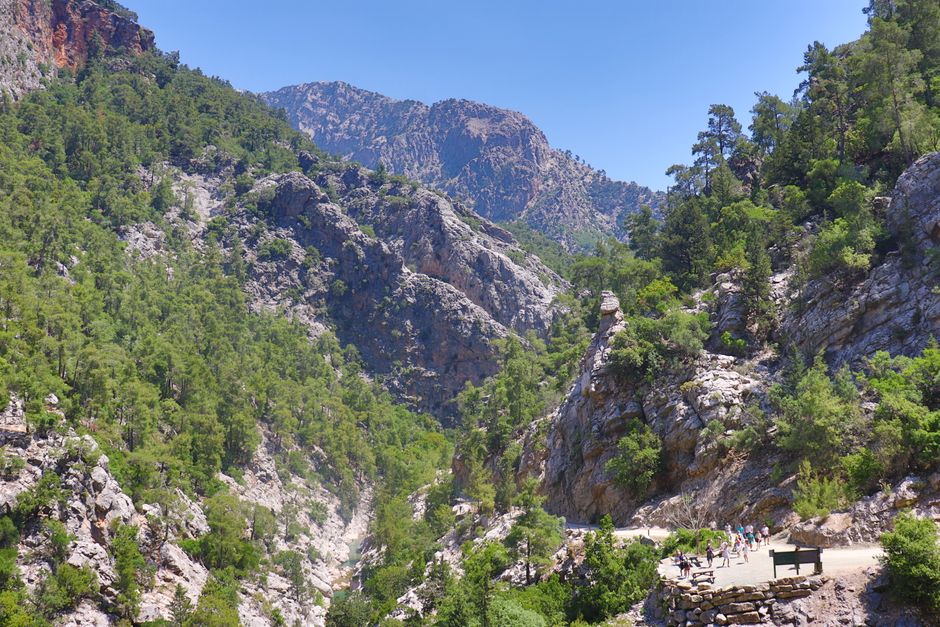
Light layers and sun protection in summer; a fleece and light rain jacket in spring and autumn; proper shoes for any gorge hike. For choosing dates, see best time to visit Crete.
Frequently Asked Questions
What is the warmest month in Crete?
July and August are the hottest, with daytime highs of 30–32°C and sea temperatures around 25–26°C. September stays warm with fewer crowds.
When does the sea get warm in Crete?
The sea is comfortably swimmable from late May through October, peaking at 24–26°C in July, August and September.
Plan with us: browse Crete region guides, compare ferries to Crete, reserve a car with a local Crete agency, or ask our AI trip planner for a custom Crete itinerary.