
Crete travel planning
Crete mythology: Zeus, the Minotaur and places to visit.
Editorial review:
Crete’s mythology gives context to a visit, especially around Knossos, Heraklion and the mountain cave traditions associated with Zeus. Keep two questions separate: what the story says, and what the archaeological site or museum actually shows. A legend can explain a place’s cultural meaning without being a literal account of an excavated building.
Knossos, Minos and the Minotaur
The familiar story connects King Minos with the Minotaur and the Labyrinth, designed by Daedalus. Theseus reaches the creature and finds a way out with Ariadne’s help. The Region of Crete’s mythology overview presents this tradition alongside other island legends.
On a visit to Knossos, do not expect a surviving underground maze that proves the story. Plan the palace as an archaeological visit, then use the legend to frame questions about kingship, the bull and the later imagination of the site. The official regional introduction to Knossos describes the palace and its association with these stories.
Our Knossos visitor guide covers the practical visit. Check current admission and opening arrangements before choosing a tour; transport, entrance and guiding are separate inclusions to verify.
Add the Heraklion Archaeological Museum
The museum gives a different kind of encounter with Minoan Crete: objects and their context, rather than the walk around a palace site. Knossos and the museum are separate places, so check how a combined day moves between them and how much time each receives.
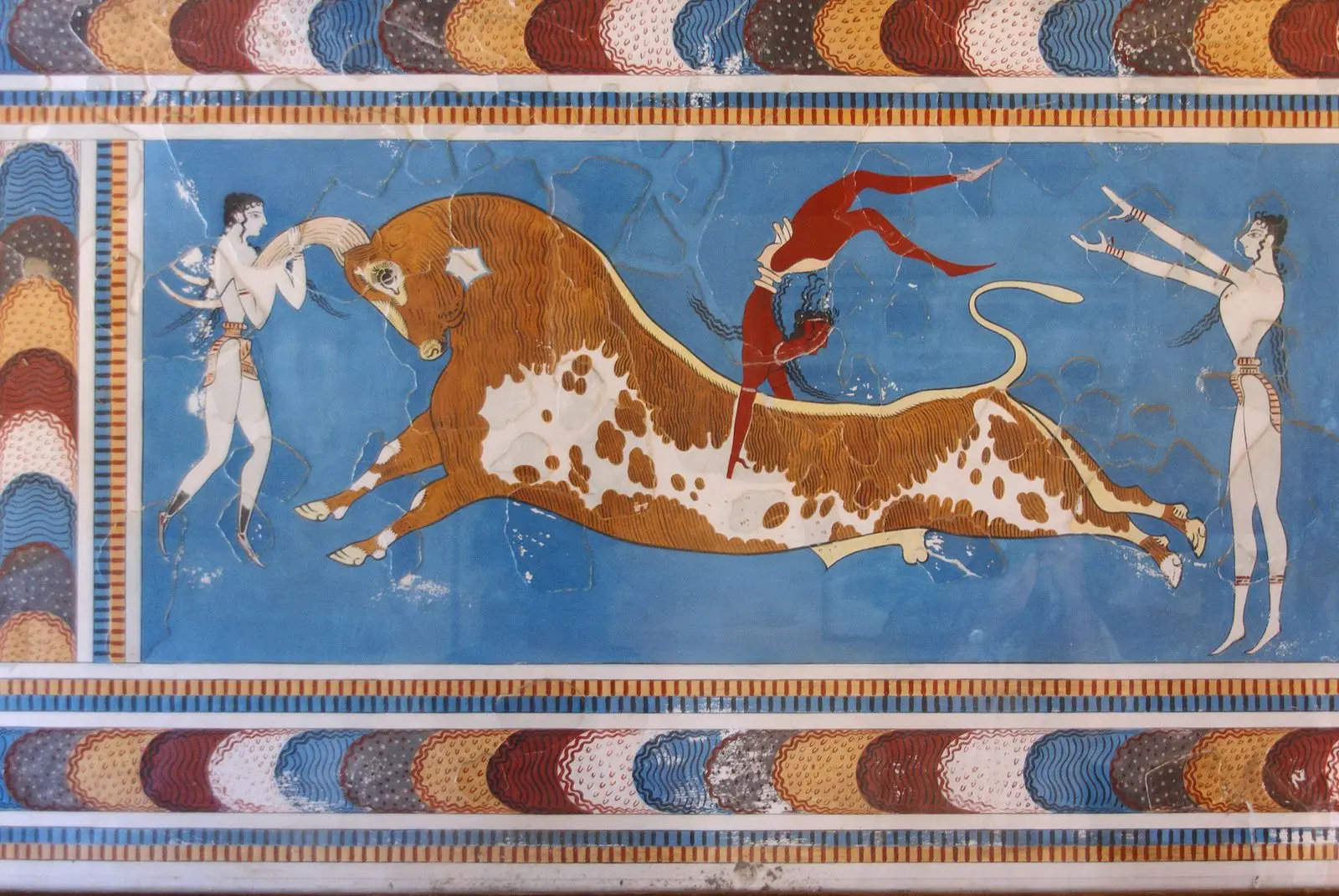
The museum’s record of Minotaur and labyrinth imagery on Knossian coins is a useful example of how the legend appears in material culture. It does not turn the myth into an eyewitness history of the palace. Read the object’s date and description rather than treating every image of a bull as the same evidence.
For current visiting information, use the Heraklion Archaeological Museum. Compare the Knossos and museum tour guide if you want help arranging the day.
Zeus and the cave traditions
Cretan traditions connect Zeus with mountain caves, including the Diktaion tradition around Psychro in Lasithi and the Idaion tradition on Mount Ida. These are different places. A booking that simply says “Zeus cave” needs a precise site name and current access information.
Before travelling, ask whether cave entry is available for your date, what walking or steps are involved and what happens if access changes. A scenic stop, a plateau tour and entry into a cave are different arrangements. Use the Lasithi guide and the Lasithi Plateau tour guide to plan the wider journey.
Europa, Daedalus, Icarus and Talos
The island’s mythological stories extend beyond one palace. Europa and Zeus connect with the royal genealogy of Minos; Daedalus and Icarus bring the story of the crafted wings; Talos is the bronze guardian associated with the protection of Crete. These are useful themes for a guided visit or a family discussion, rather than extra places to race between on a map.
Choose a small number of sites and leave time to understand them. A day that combines every famous name can become mostly transport. The Crete map guide helps separate the central, eastern and mountain locations.
Is the Labyrinth a place I can walk through at Knossos?
Plan to visit the archaeological palace. Do not book on the assumption that the mythical maze survives as a separate walk-through attraction. Ask the guide how they distinguish the story from the archaeological evidence.
Can I visit the palace and museum in one day?
Compare opening arrangements, transport and the time you want at each. The two visits serve different purposes. Check whether your chosen tour includes both admissions and the journey between them.
Which Zeus cave should I choose?
Identify the actual cave and the region first. Compare current access, walking requirements and the complete journey from your base. A name shared by different traditions is not enough to choose a departure point.