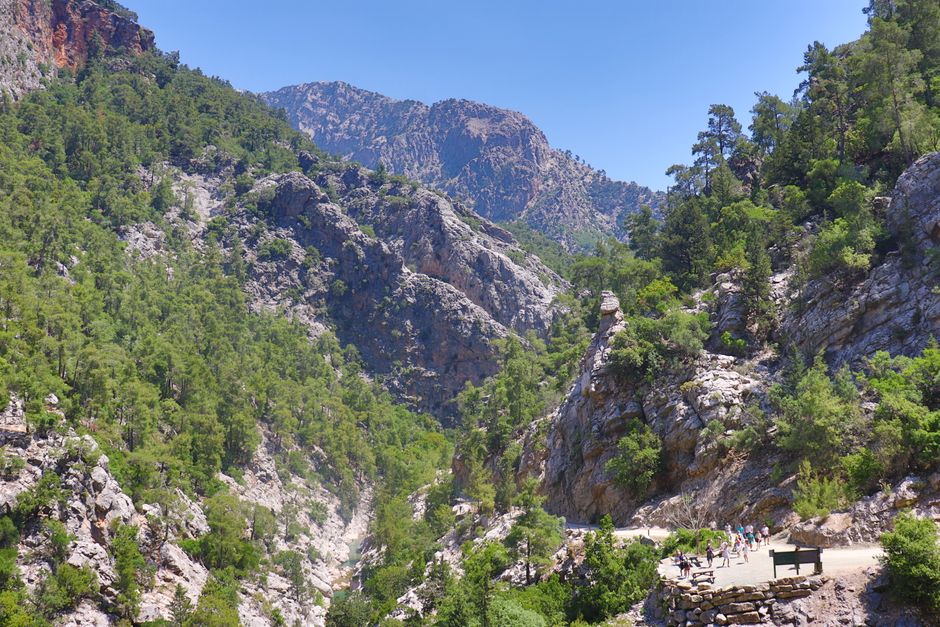
The Imbros Gorge is Crete's best-kept hiking secret. At 8 km it is less than half the length of Samaria, requires no early-morning bus logistics, stays open year-round, and costs nothing to enter. The narrow section through limestone walls just 2 m apart is as dramatic as anything in the more famous gorge — and you will share it with a fraction of the crowd.
Key Facts
- Length: 8 km (top to bottom, descent only)
- Total descent: approximately 700 m
- Walking time: 2.5-4 hours (average 3 hours)
- Difficulty: Easy to moderate. No technical sections. Rocky underfoot in places.
- Season: Open year-round (unlike Samaria, which closes November-April)
- Entry fee: None
- Best months: April-June, September-November (spring flowers; fewer people; no extreme heat)
The Route
Start Point: Imbros Village (680 m altitude)
The gorge begins at the village of Imbros (Imvros), 55 km south of Chania via the Askyfou plateau. The trailhead is clearly signed at the south end of the village. A small car park and a seasonal kafeneio are here.
Section 1: The Narrow Section (Km 0-3)
The first 3 km is the most spectacular. The gorge walls close in to 2 m apart in places, with the sky reduced to a strip of light overhead. The path is well-marked and mostly flat. Deciduous oaks, carobs and plane trees line the gorge; in spring, wildflowers — anemones, asphodels, cyclamen — fill the gaps between boulders. Kri-Kri (Cretan wild ibex) are commonly spotted on the cliff faces.
Section 2: The Widening (Km 3-6)
The gorge broadens into a wider valley with terraced olive groves. The path becomes easier and more pastoral. A few abandoned stone houses from the village of Komitades sit above the gorge floor on the right side.
Section 3: Approach to Chora Sfakion (Km 6-8)
The final section drops more steeply toward the sea. The village of Komitades is visible to the right (a short detour for coffee). The exit of the gorge opens onto the main Chora Sfakion road, about 1.5 km above the coast. Most hikers continue on foot or take a taxi into Chora Sfakion for the ferry or bus.
Getting There and Back
Getting to Imbros Village (start)
- By car: Drive south from Chania on the E65 toward Sfakia, through the Askyfou plateau. Turn right for Imbros village. Park at the trailhead. The drive is 55 km / 1 hour from Chania.
- KTEL bus: A daily morning bus runs from Chania to Chora Sfakion via Imbros — check the current timetable at the Chania KTEL station. The bus stops in Imbros village.
Getting back from Chora Sfakion (end)
Chora Sfakion is a small coastal village with ferries and buses.
- Bus back to Chania: KTEL buses run from Chora Sfakion north to Chania (1h 30m, 7.50 euros). Check times — typically 2-3 services per day.
- Ferry: ANENDYK ferries connect Chora Sfakion with Agia Roumeli (for Samaria gorge exit), Loutro, Sougia and Paleochora. If you want to combine Imbros with the south coast, this is a beautiful option.
- Taxi: From Chora Sfakion back to Imbros to collect a car: approximately 15-20 euros.
Recommended logistics (by car): Leave a second car in Chora Sfakion the evening before, drive both cars to Imbros in the morning, hike, then drive one car back to collect the other. Or use the shuttle taxi service offered by Chora Sfakion taxi drivers.
Imbros vs Samaria: Which One?
| Imbros Gorge | Samaria Gorge | |
|---|---|---|
| Length | 8 km | 18 km |
| Walking time | 3 hours | 5-6 hours |
| Difficulty | Easy-moderate | Moderate |
| Entry fee | Free | 5 euros |
| Season | Year-round | May-October |
| Crowds | Low | Very high |
| Drama factor | High (narrow section) | Very high (Iron Gates) |
| Logistics | Simple | Complex (boat out) |
Our recommendation: Do both if you have a week. If you only have time for one, choose Samaria for the full experience. Choose Imbros for families, spring/autumn travel, or if you want a half-day rather than a full day.
Practical Notes
- Shoes: Trail shoes or hiking boots required. The rocky path is harder on ordinary trainers.
- Water: Bring 1.5 litres minimum. No reliable water source in the gorge (unlike Samaria).
- Shade: The narrow section is shaded; the middle and lower gorge is open. Start before 09:00 in summer.
- Dogs: Allowed on a leash.
- Children: Suitable for children aged 6 and up at a slow pace. The 8 km is comfortable for most families.
What Else to See in Sfakia
The Imbros Gorge sits in the Sfakia region, the most remote and rugged part of Crete. Combine with:
- Loutro — the only Greek village with no road access, reachable only by ferry or on foot. Tiny, beautiful, car-free.
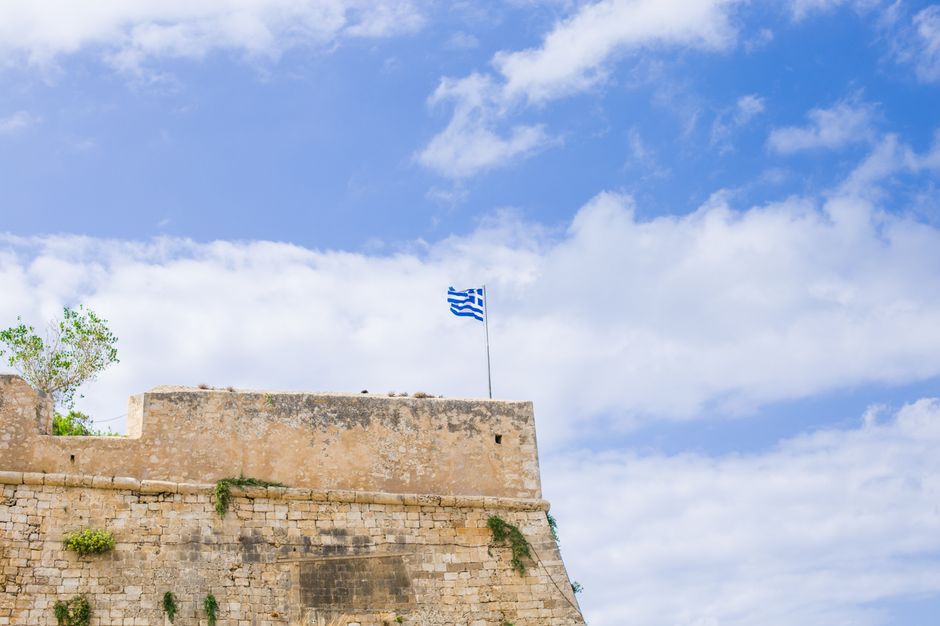
- Frangokastello — a 14th-century Venetian castle on the beach, with a wide sandy beach and clear water.
- Chora Sfakion — the regional capital, famous for its lamb dishes and Sfakian pie (sfakiani pita — cheese and honey pastry).
Frequently Asked Questions
Is Imbros Gorge suitable for beginners?
Yes. Imbros is one of the most accessible gorge hikes in Crete. The 8 km route is mostly downhill on a well-maintained path. Wear proper shoes and bring water. Suitable for anyone who can walk for 3 hours at a comfortable pace.
Can I hike Imbros Gorge in winter?
Yes — Imbros is open year-round, unlike Samaria which closes from November to April. Winter and spring (February-April) bring wildflowers and a rushing stream through the gorge. Expect cooler temperatures and some mud after rain.
How do I get back from the end of the gorge?
The gorge exits near Chora Sfakion (Hora Sfakion), about 1.5 km from the village. From there: KTEL buses run back to Chania, or take a taxi back to Imbros to collect your car. Some visitors continue by ferry along the south coast.
Is there a fee to enter Imbros Gorge?
No — Imbros Gorge has no entry fee, unlike the Samaria Gorge National Park which charges 5 euros. The trailhead car park in Imbros village is also free.
Plan with us: browse Crete region guides, compare ferries to Crete, reserve a car with a local Crete agency, or ask our AI trip planner for a custom Crete itinerary.