
Crete travel planning
Matala: beach, caves and a south-coast day out.
Editorial review:
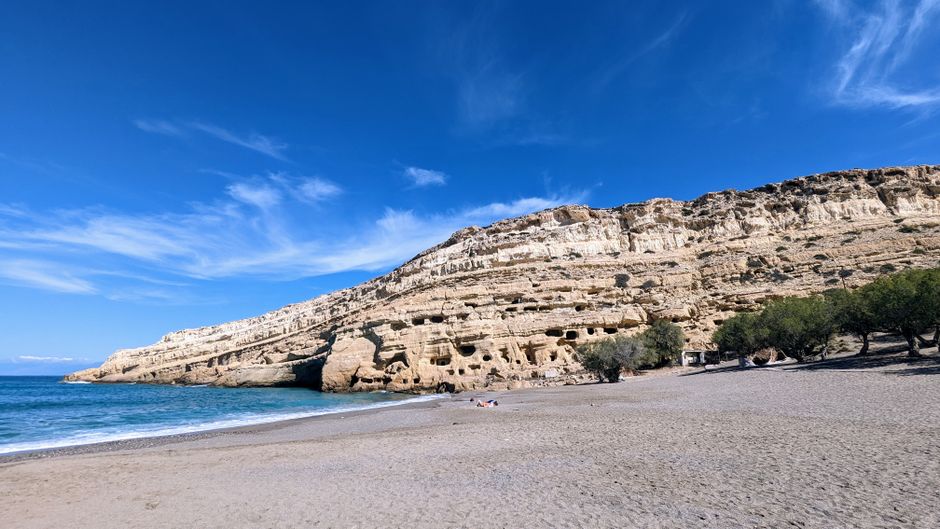
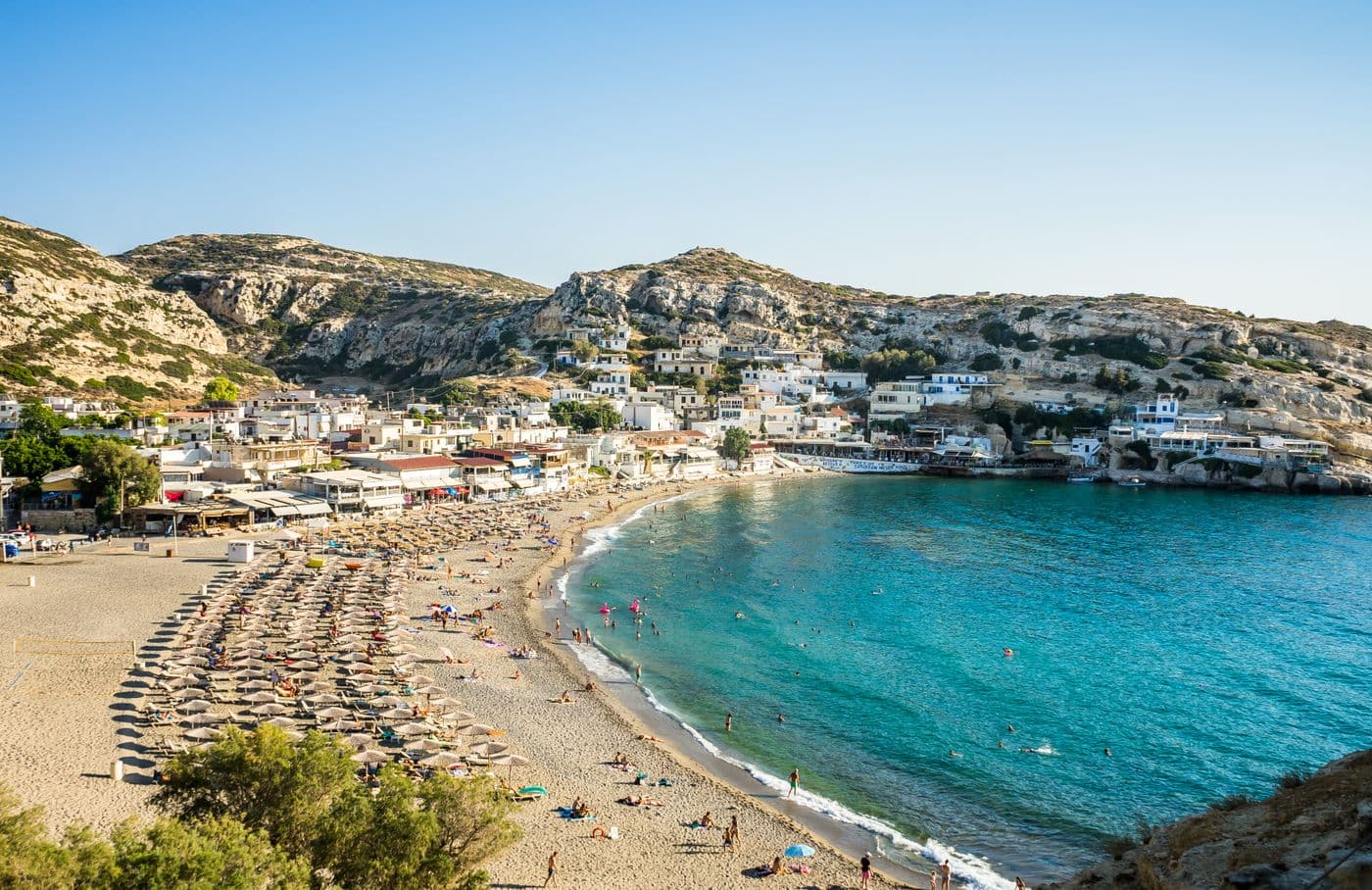
Matala is a beach village on the southern side of the Heraklion region, known for its cave-lined cliff and its association with the counterculture of the 1960s and 1970s. Choose whether the beach, caves or nearby archaeology is your priority before adding other stops.
The village and caves
The Region of Crete’s Matala description explains the bay’s historic use and later counterculture associations. The cave cliff is an archaeological place, not accommodation or an unrestricted climbing area. Use the official visitor entrance and follow the permitted route.
Check the current cave-site opening, admission and announcements through Hellenic Heritage. Beach access and cave admission are separate questions. Heat or other restrictions may affect the archaeological visit even if the village remains accessible. Avoid building a journey around an old cave price or a photograph of an open gate.
The main beach or Red Beach?
The main bay puts the village and refreshment options near the shore. Check the actual water conditions and local warnings; a sheltered shape does not guarantee calm, shallow or safe swimming every day. For children, choose the position, supervision and conditions on arrival.
Red Beach, also called Kokkinos Ammos, involves a separate path over the headland. Assess the route and climb back in the heat, carry water and wear suitable shoes. Do not treat a short distance on a map as an easy or step-free beach approach. If the walk does not suit your group, keep the visit around the main bay.
Add archaeology thoughtfully
Phaistos can fit a south-central route, but it is a separate archaeological stop with its own hours. Check the official Phaistos visitor page for the visit you intend to make. The original Phaistos Disc is displayed in Heraklion’s archaeological museum, rather than being something you see in the palace ruins.
Gortyn is another distinct site on the wider Messara route. Choose one substantial visit with enough time to understand it before deciding to add the second. Include parking, lunch, the beach and the drive back when calculating the day. A three-stop itinerary can leave little time at each place.
Getting there from the north coast
From Heraklion, compare a southbound car route with the bus service for your date. For public transport use KTEL Heraklion–Lasithi and establish the actual departure station, any change and the last return. From Chania or Rethymno, map the complete road journey from your accommodation instead of applying a city-centre estimate to every starting point.
For an organised excursion, check whether cave admission and archaeology are included or whether Matala is mainly a beach stop. A Heraklion day-tour collection lets you compare those itinerary differences. Rental planning is covered in the Heraklion car guide.
Staying in Matala
Compare an address in the centre with accommodation on the approach road or in neighbouring settlements. Ask about parking, luggage access, evening dining and the route to the beach. A wider regional label does not guarantee a walkable Matala stay. Start with the Matala accommodation guide.
If a festival is the reason for your trip, verify the organiser’s confirmed dates and programme before arranging transport or accommodation. The village’s musical history is not proof that an event happens on the same weekend every year.
Frequently Asked Questions {#faq}
Can I visit Matala’s caves?
Use the official archaeological entrance when it is open and follow the permitted route. Check current admission and any closure notices separately from beach access.
Is Matala beach always calm?
No. Check the sea, depth and local warnings on the day. The bay’s shape does not provide a general safety guarantee for swimmers or children.
Is Red Beach the same beach as Matala?
No. It is a separate cove reached by a headland path. Allow for the walk and uphill return, suitable footwear, water and the weather.
Can I combine Matala with Phaistos?
They can form a south-central outing if transport and opening hours fit. Allow time for the archaeological visit, parking, food and the return rather than treating them as a fixed short stop.
Continue planning with the Crete region guides, ferry planning guide and car rental guide.